Let the gauntlet be thrown post-haste: in my humble opinion, AI is not an inherently evil technology.
Maybe I'm catching a bunch of unsubscribes on this statement alone, but let me reassure you, dear reader: in no way do I feel it’s acceptable to use what we call AI these days (aka Large Language Models (LLMs) in this case) for any kind of artistic endeavour. I don’t think AI-generated pictures are any good, nor do I care about generic AI-written copy or dumb fucking AI songs based on silly prompts.
But there are some tool-based use cases I do think the technology is useful for and quite frankly I’m a little perturbed that folks seem willing to throw out any potential good use just because some ghouls think they’re building virtual God.
Let me dig into that and where the line is for me between acceptable and unacceptable use.
BUT FIRST, CATCH THESE STRAYS!
Drug Church released a new song: Pynch! No news of a new album or other release, oddly enough, but I’ll take a DC song any day of the week.
Two of my favourite current post-metal bands, Throwing Bricks and Ontaard, last year performed a special set of songs together at the Roadburn festival called Something To Lose. Now, that set is available as a recording. Please check it out, inspiring, gut wrenching music.

Ontaard at a show I shot in 2024
Following last week’s update on getting into Blu-Rays, I got myself Blade Runner and its decades-later sequel Blade Runner 2049. Perhaps it is sacrilege to even suggest that they might not, but these films hold up incredibly well. And they look amazing in 4K UHD too, should you have an inclination to watch them on disc.
Physical books are my preferred reading medium, but I do have to admit that the teensy tiny Xteink X3 e-reader has a lot of appeal, mostly based on the thought that one could carry a library in such a form. It’s so tiny you can stick it on the back of your phone! Or just a shirt pocket, I suppose.

My recent fascination with fashion is probably the stuff for a longer blog post, and I may very well write it in the near future, but for now, check out Ken Sakata’s amazing videos about the history and culture behind different pieces of clothing. Why are bomber jackets the way they are? What makes a pair of jeans, jeans? Sakata also runs his own clothing label, Front Office, and has released some cool and innovative takes on more traditional clothing.
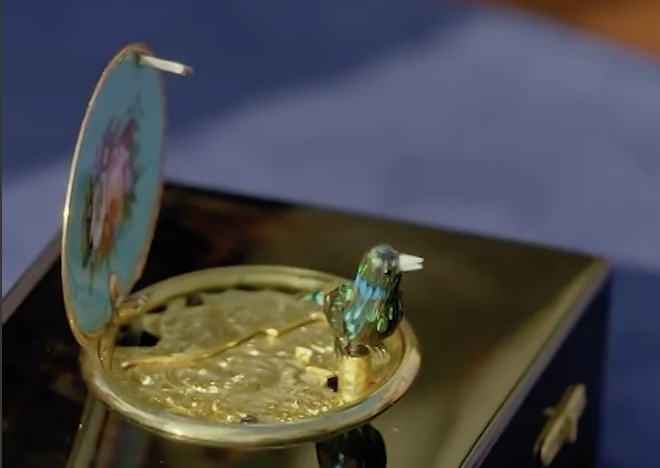
Random video for you: an incredible piece of both art and technology on the UK Antique Road Show: a bird automaton. A lot could be said about the joy this meticulously made music box inspires, but that’s for another time. Meanwhile, merely enjoy the spectacle.
The Wax Child by Olga Ravn is a gripping and exceedingly original and well-written novel about Danish witch trials in the 17th century. A current fav.
If you don’t have children with video game predilections, don’t watch The Super Mario Galaxy Movie. Best described as an animated Nintendo-themed Where’s Waldo, it's more interested in throwing out dozens of references than actually telling much of a coherent story.
My favourite ongoing tv show has a new
seasonseries: Taskmaster! The first episode is now available on YouTube, with subsequent episodes coming out each week.
ON TO THE MAIN COURSE, MESSIEURS ET MESDAMES:
Before we dive into the material at hand, some defining work: when I use the abbreviation "AI" in this piece, I’m specifically referring to generative AI, or LLMs like ChatGPT, Claude1 and so on. The concept of artificial intelligence certainly stretches out in time to well before this usage of the term, but for the sake of keeping this metaphorically legible, let’s agree on this at least.
So then, AI certainly has an incredibly bad reputation in creative circles, and in most cases I would argue it has earned it. First of all, it is fully built on copyright infringement, having trained models on all manner of copyrighted works that the original creators had no knowledge of or have been compensated for. There are numerous attempts at reparations going on for this, and honestly: rightly so.
It doesn't help that whenever new capabilities are shown off, AI evangelists immediately rush to showing off just how well a new model can infringe on someone's copyright, as if that's a laudable trait.
People who claim LLMs can do actual creative work do not actually know what creative work or its purpose even is. Creating art is a foundational human endeavour that connects us in ways that regular, straight-down-the-middle language simply cannot.
Verily, I wouldn’t dare say all human-created art is unique. In fact, I’d say most art builds on top of something else; an experience the artist had, or even another artwork that directly inspired them. I’m also not saying that human-made art is per definition any good. But I don’t think an LLM can actually create anything radically new in a way that even a hack artist could, merely because that hack artist does their work for a reason, and that reason, however mundane or criminal or insane, can still connect with another human being.
Even if an LLM could create something new, it has no concept of intent, there is no original thought behind it, no personality infused in it. It is mere replication and mutation. Nothing inherently evil about that, apart from when people mistake it for actual art, of course.
So anyway.
Guess what AI is actually good for?
Funnily enough, it's good at what computers have always been good at since the dawn of time: crunchin’ numbers. It just does it in a different manner.
You got a big ol’ spreadsheet full of stats but you’re not a spreadsheet person so it's hard to learn anything from it? Throw them into an LLM and just plain ask it stuff about it. Then check the answer, of course, because for some reason the AI companies still can’t prevent their bots from straight up lying to you. But fair enough, even with the checking it’s still quicker and more efficient.
Making a presentation. Got a whole plan written out and need to present it but you’re shit at PowerPoint? Throw the plan into the machine and you’ll get a deck that’s about 80% of the way there.
Coding! Need a funky little app or website to do one specific thing and you know that no one else will ever build it? Ask an LLM and you have an app running on your phone doing that one specific thing in an afternoon.
Hopefully the pattern is clear: AI is quite good at doing very straightforward number crunching and data organisation in a fuzzy way.
And that’s useful! For my day job I actually need to do a bunch of number crunching and data organisation. And I despise number crunching and data organisation, but unfortunately such is the reality of my day-to-day, so any help I can get, I take.
And then there’s more creative aspects of my job, like writing. And I’ll be damned if an LLM comes within ten feet of that.
There is some tension in some of the use cases I mentioned, of course. Making a presentation can be a creative endeavour. How one presents information requires some creative insight. And certainly a handcrafted deck will win out from an AI-generated one. Or take coding – the end result of a program has, embedded in it, hundreds, if not thousands of creative choices.
To make TerrorManagementZine.com, I certainly used AI. But I used it as a tool to create the aesthetic I chose to make. I decided what elements of the page go where, what the colour scheme of the site is, what font to use, and so on. Claude Code arranged that into the final product, after much back and forth. And it helped me resolve technical issues that I simply would not have been able to, or at least not without a few years of website building experience.
This tension is a grey area that as human beings we will have to navigate. We will have to decide what creative decisions are ok to give to robots. When are the stakes too high to do that? To me, the answer is quite clear.
Apologies, as there is not a grand point here about AI. On this subject I certainly am not a firebrand, but I do hope it’s clear I’m not an unconditional fan.
As the hype of this new technology dies down and we finally realise that digital Jesus is not upon us, let us at least not throw the spreadsheet-crunching baby out with the plagiarising bathwater.
1 Side note: judged on the grand moral spectrum of our time, most of these companies are pretty terrible. It’s not for nothing that this New Yorker story exists that outs OpenAI CEO Sam Altman as a near-psychopath-level compulsive liar. But let’s be real and note that companies like xAI, which has to deal with the Elon of it all, are not much better.